
Travel guide
Porto
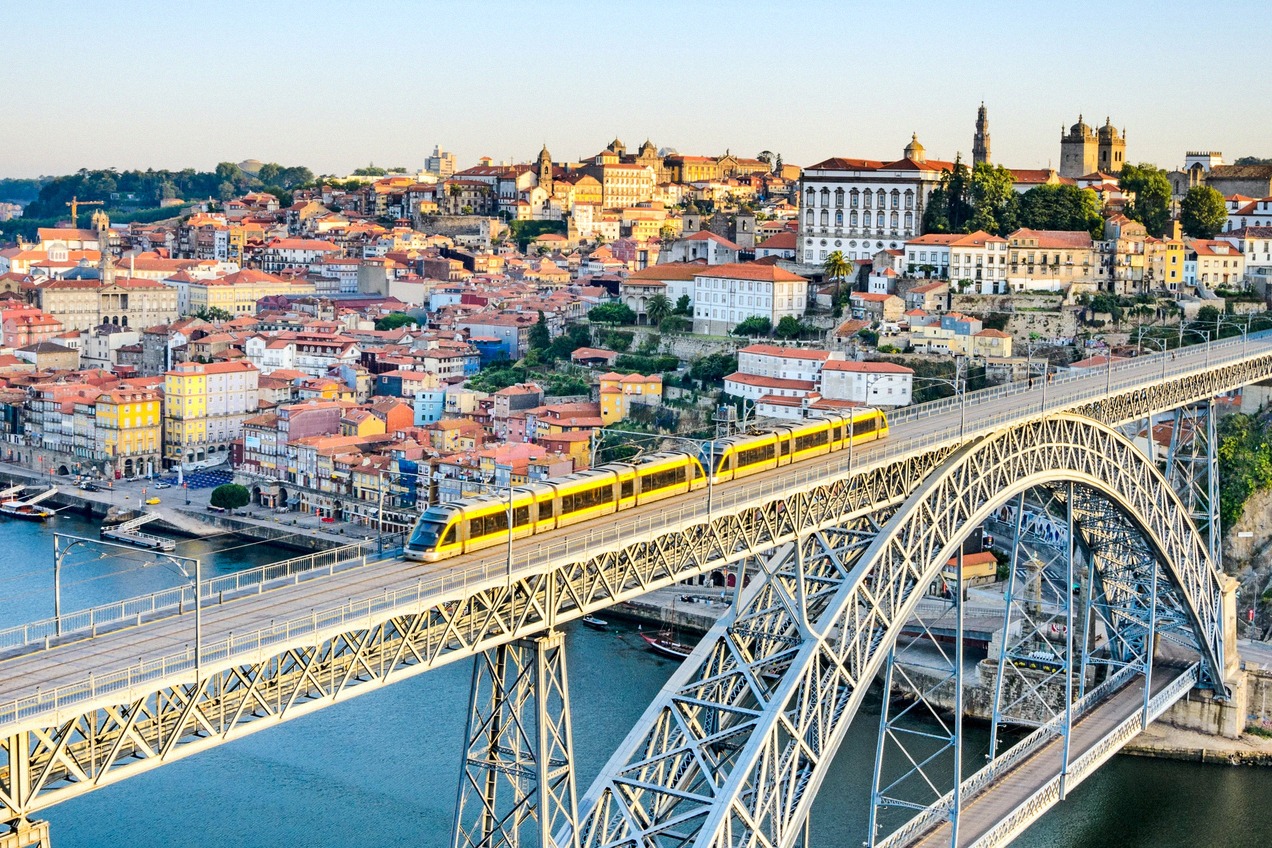
Porto lies in the north of Portugal, where the Douro flows into the Atlantic. Since 1996 the old town on the hillside above the river and the Luís I Bridge have been a UNESCO World Heritage Site. On the south bank in Vila Nova de Gaia, wines from the Douro Valley age in the cellars of the port houses. West of the city, the Atlantic beaches begin.
What brings you to Porto?
Atlantic beaches
Douro Valley
Arriving by air
Weather and when to go
Bookshop, riverside and port wine cellars
Frequently asked questions
How do I get from the airport into the city? +
The easiest way is Metro line E. It starts at the airport and reaches Trindade in the centre in around half an hour. There are also city buses, the 3M night bus, and taxis. For details, see Porto Airport.
When is the best time to visit Porto? +
It is driest from June to September, and July and August are the warmest months. Most rain falls from October to January, and winters are mild. The forecast and monthly averages are on the Weather page.
Which parts of Porto are World Heritage? +
The site is called Historic Centre of Oporto, Luiz I Bridge and Monastery of Serra do Pilar and was inscribed in 1996. It includes the Ribeira, the Sé Cathedral and the monastery on the Gaia bank. For details, see Sights.
Where are the port wine cellars? +
In Vila Nova de Gaia, on the south bank of the Douro opposite the Ribeira. You can walk across on the lower deck of the Luís I Bridge. Many houses show visitors their cellars on guided tours, some by reservation only. For details, see Vila Nova de Gaia.
Is a day trip to the Douro Valley worth it? +
Yes, if you stick to one destination. Trains on the Douro Line (Linha do Douro) run from Porto to Régua and Pinhão, where the terraced slopes rise straight from the river. From 3 November 2026 to 24 March 2027, replacement buses run between Marco de Canaveses and Régua. For details, see Douro Valley.