

Cálem Cellars: Tour, Museum and Tasting
All you need to see, touch and taste regarding Port in Portugal
The bank opposite the Ribeira, with port wine cellars, a cable car and views of Porto
Vila Nova de Gaia is the town on the south bank of the Douro, directly opposite the Ribeira. You can walk across on the lower deck of the Luís I Bridge. Along the waterfront and in the lanes behind it, wines from the Douro Valley age in the cellars of the port houses, and many houses show visitors their cellars on guided tours.
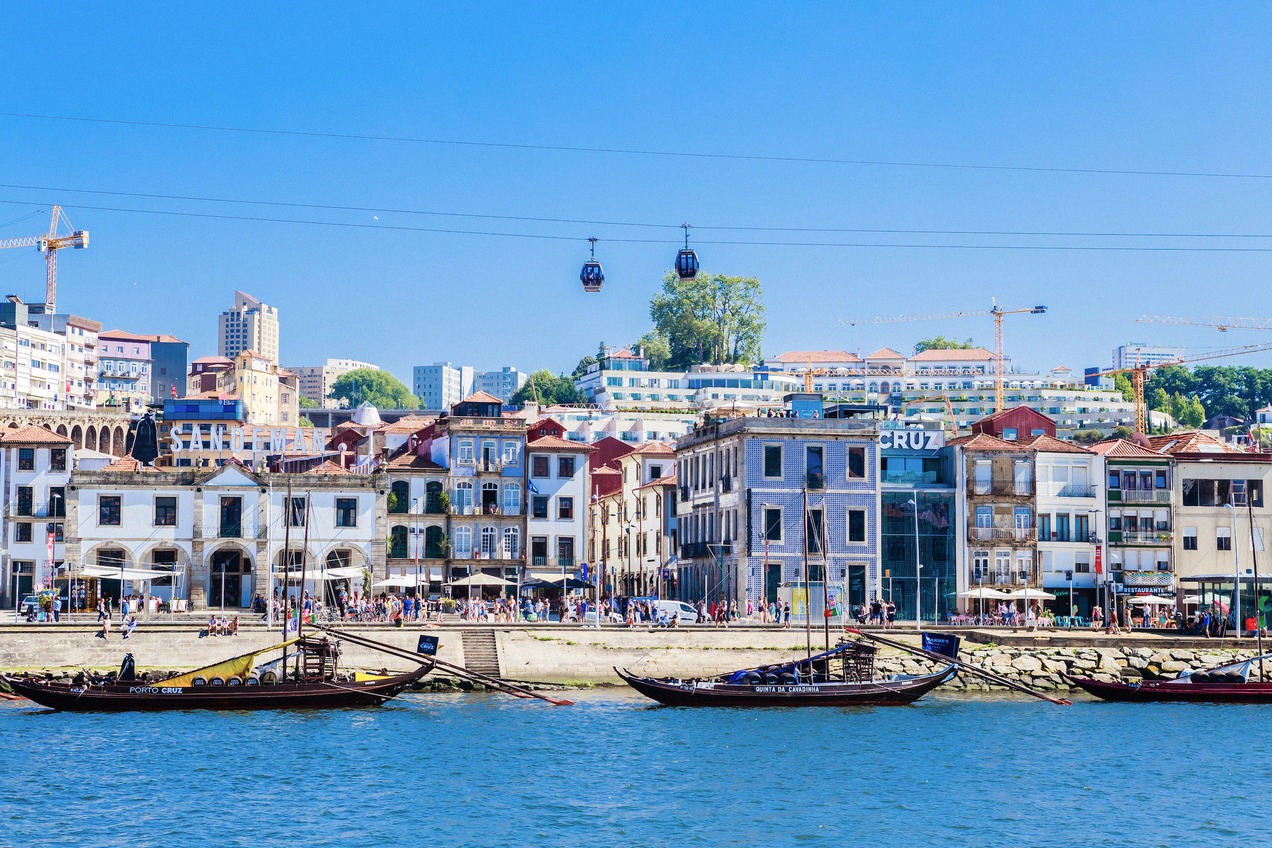
Vila Nova de Gaia lies on the south bank of the Douro, directly opposite the Ribeira. Gaia is a separate town with its own local government, but for visitors the waterfront with its port wine cellars (lodges) is very much part of a stay in Porto. From Cais de Gaia you look across the river to the rows of houses on the Ribeira and the old town on the hillside.
The link with port wine goes back centuries. From the 16th century onwards, foreign merchants settled in Gaia. The wine came downriver from the Douro Valley on rabelo boats and was stored in the waterfront cellars before being shipped. In the 19th century Gaia was the centre of the port wine trade. Many firms still run their cellars here today, along with museums and visitor centres.
The Luís I Bridge links Porto and Gaia on two decks. The upper deck opened in 1886 and the lower deck in 1888. It was designed by Théophile Seyrig, a pupil of Gustave Eiffel. The bridge is 395 m long and replaced an older suspension bridge.
If you take the metro to Jardim do Morro, you can enjoy the view at the top and then ride the cable car down to the waterfront.
The cellars are on the waterfront, for example along Avenida Diogo Leite, and in the streets behind it. The town of Vila Nova de Gaia keeps a list of houses open to visitors. A selection in alphabetical order:
| House | Address |
|---|---|
| Burmester | Largo da Ponte Luiz I |
| Cálem | Avenida Diogo Leite 344 |
| Cockburn's | Rua Serpa Pinto 346 |
| Ferreira | Avenida Ramos Pinto 70 |
| Fonseca | Rua do Choupelo 84 |
| Graham's | Rua Rei Ramiro 514 |
| Niepoort | Rua Serpa Pinto 278 |
| Ramos Pinto | Avenida Ramos Pinto 380 |
| Sandeman | Largo Miguel Bombarda 47 |
| Taylor's | Rua do Choupelo 250 |
Each house organises its visits in its own way, from classic guided tours to self-guided audio tours.
Some houses require a reservation, Graham's for example from April to October. When booking online with Graham's, Cockburn's and Cálem, you confirm that you are of legal drinking age.
The grapes for port wine do not grow in Gaia but upriver in the Douro Valley. The vineyards on the terraced slopes have been a World Heritage Site since 2001 as the Alto Douro Wine Region. Rabelo boats once carried the casks downriver to Gaia. If you want to see where the wine comes from, combine a cellar visit with a day in the valley.
Above the upper deck of the bridge, on the Gaia side, stands the Serra do Pilar Monastery. Together with the Luís I Bridge and Porto's historic centre, it has been a World Heritage Site since 1996. From the viewpoint at the monastery church you look down on the bridge, the river and Porto's old town opposite. The Jardim do Morro cable car station and the metro station of the same name are nearby.
For more sights on the other side of the river, see Sights, and for accommodation in both towns, see Where to stay.
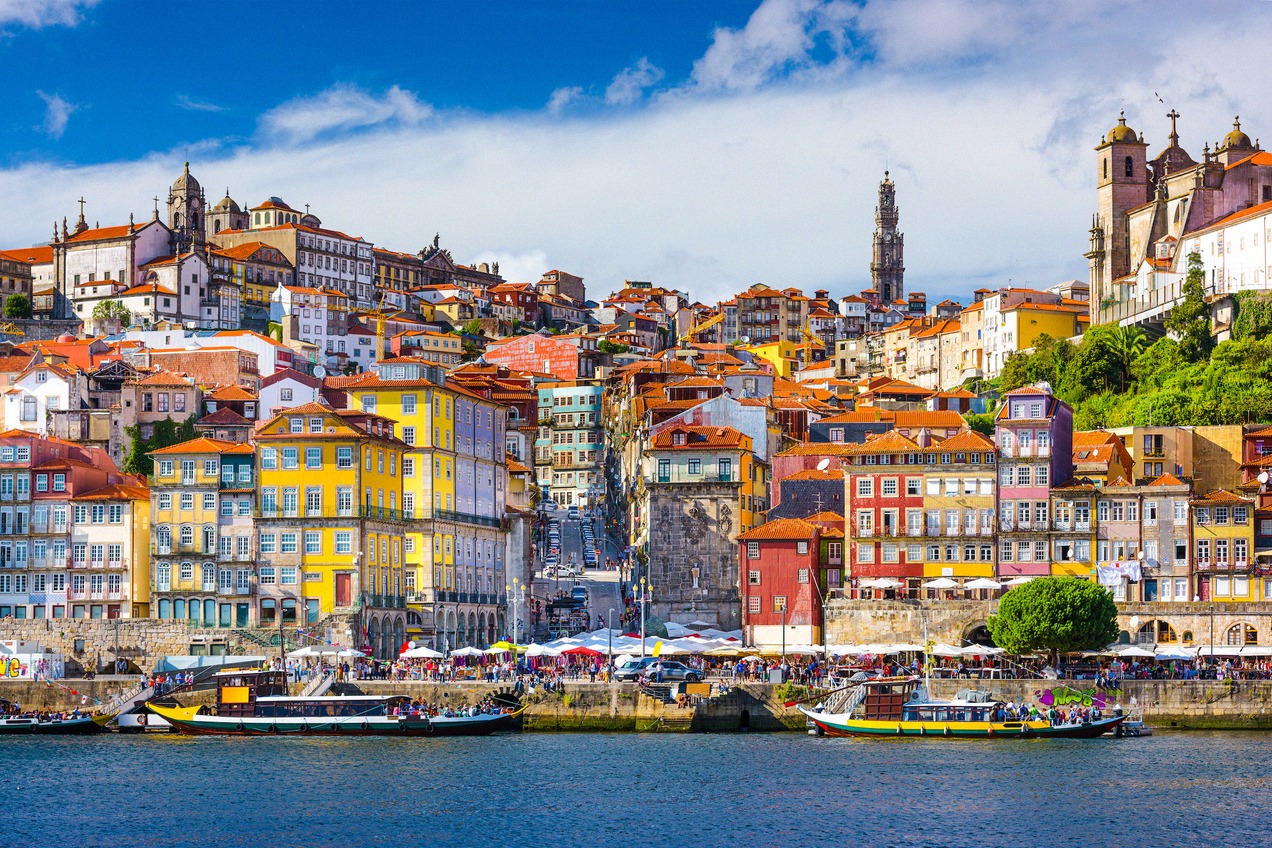
The Ribeira is the old town's riverfront on the Douro. The Luís I Bridge starts here, and its lower deck takes you on foot to Vila Nova de Gaia.
The Douro Valley is port wine country and has been a World Heritage Site since 2001. The railway from Porto follows the river for long stretches, and Régua and Pinhão are the usual day-trip destinations.
Porto's old town is a UNESCO World Heritage Site. Its highlights include the Sé Cathedral, the Torre dos Clérigos, São Bento station with its tile panels, the Palácio da Bolsa and the Ribeira on the Douro.


