

Douro Valley: Day Trip from Porto with Boat Ride and Lunch
Tour the charm and beauty of Portugal's sun-kissed wine region
The Douro's wine terraces as a day trip from Porto
Upriver from Porto, the Douro's wine terraces climb the schist slopes. The region is the home of port wine and a World Heritage Site as the Alto Douro Wine Region. By train on the Douro Line (Linha do Douro), on the river or on a tour, you can reach Régua and Pinhão in a day.
The Douro Valley is the wine region where port wine comes from. The Região Demarcada do Douro is considered the oldest regulated wine region in the world, and part of it has been a World Heritage Site since 2001 as the Alto Douro Wine Region. The valley has been settled since Roman times.
The region covers around 250,000 hectares and is divided into three subregions: Baixo Corgo, Cima Corgo and Douro Superior. Vines grow on just under a fifth of the area, farmed by around 20,000 growers, mostly on small plots.
The terraces on the steep slopes are the region's signature. The soil is schist; the rock was broken up to build the terraces, and their walls protect the slopes from erosion. The Marão and Montemuro mountains shelter the valley from Atlantic winds. Winters are cold, summers hot and dry, and rainfall decreases steadily towards the east.
The Douro Line (Linha do Douro) starts in Porto and ends in Pocinho after around 172 km. From Porto São Bento and Campanhã the train first runs through the hinterland, and the river valley comes into view at Pala. From there the line largely follows the Douro via Régua and Pinhão to Tua and Pocinho, switching from the right bank to the left bank at Ferradosa.
Suburban trains run on the line as far as Marco de Canaveses, with Regional and InterRegional trains continuing into the valley. Pinhão station, with its azulejo panels, is one of the most beautiful stations in Portugal. The line was built from 1875 onwards, reaching Régua in 1879 and Pinhão in 1880.
Engineering works in winter 2026/27: From 3 November 2026 to 24 March 2027, no trains run between Marco de Canaveses and Régua. Replacement buses stop at all stations in between, and there are also direct buses between Caíde and Régua. Bicycles, scooters and wheelchairs cannot be taken on the buses, and small pets only in a carrier.
Tickets are available in the CP app, online up to 60 days in advance, by phone and at station ticket offices.
In summer the Comboio Histórico, a train with vintage carriages, runs between Régua and Tua. The 36 km route follows the river, with a stop in Pinhão. On board there is regional music and tastings of local produce. Most recently the train ran at weekends from June to October and on selected Wednesdays in high summer. CP sets the operating days anew each season.
The Douro is navigable for around 210 km, from its mouth in Porto to Barca d'Alva on the Spanish border. Along this stretch, five locks overcome a difference in height of 125 m. Besides cargo traffic, excursion boats use the river and pass through the locks too.
For a day trip from Porto, it pays to focus on one stretch. By train, Régua and Pinhão are the obvious destinations; during the engineering works until 24 March 2027, you change to the replacement bus. By car or on a tour you have more flexibility and can also reach viewpoints and wine estates away from the railway.
Summers in the valley are hot and dry, winters cold. You can see the Douro's port wine ageing in the cellars of Vila Nova de Gaia, and Day trips from Porto has more ideas for a day out. For travel to Porto, see Getting there.
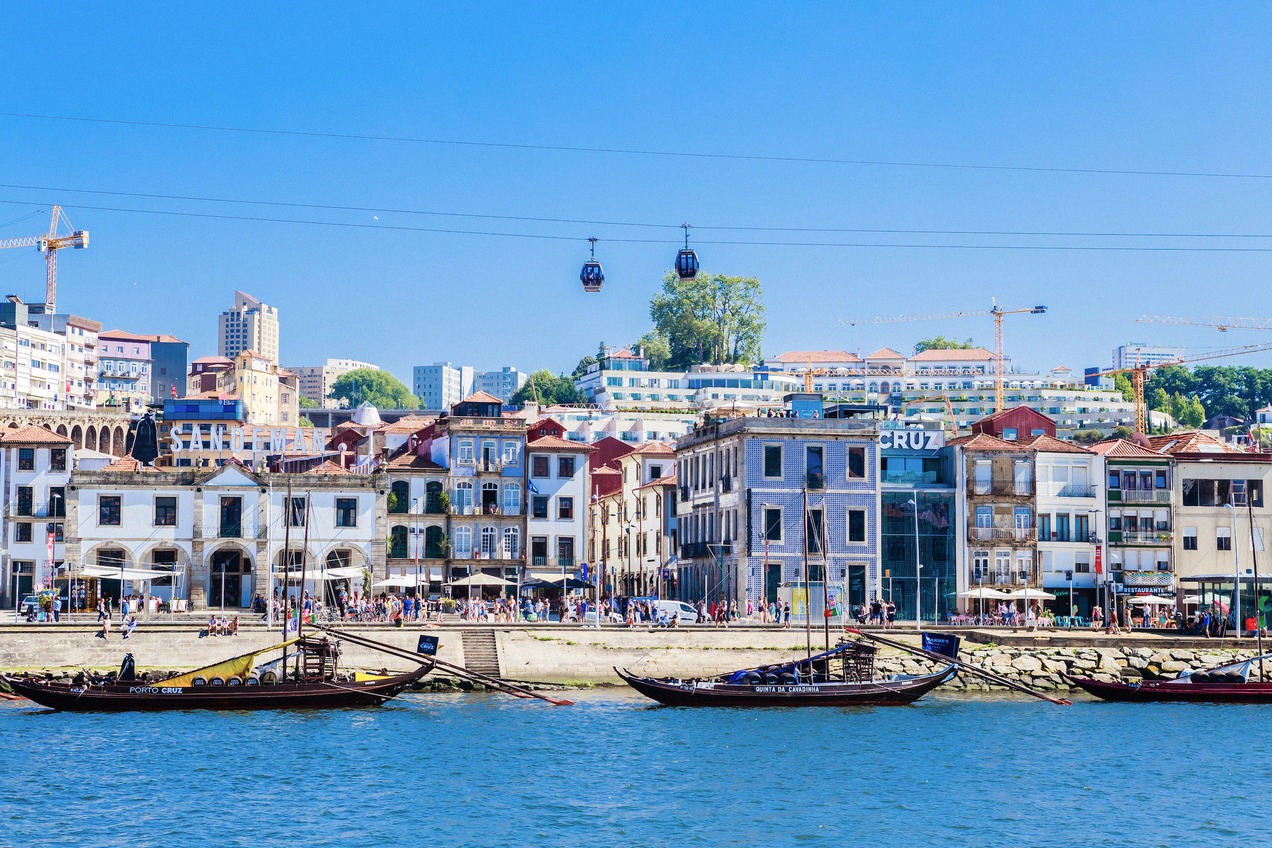
Gaia lies on the south bank of the Douro, opposite the Ribeira. The cellars of the port houses line the waterfront and the hillside, the Serra do Pilar Monastery stands above, and a cable car runs in between.
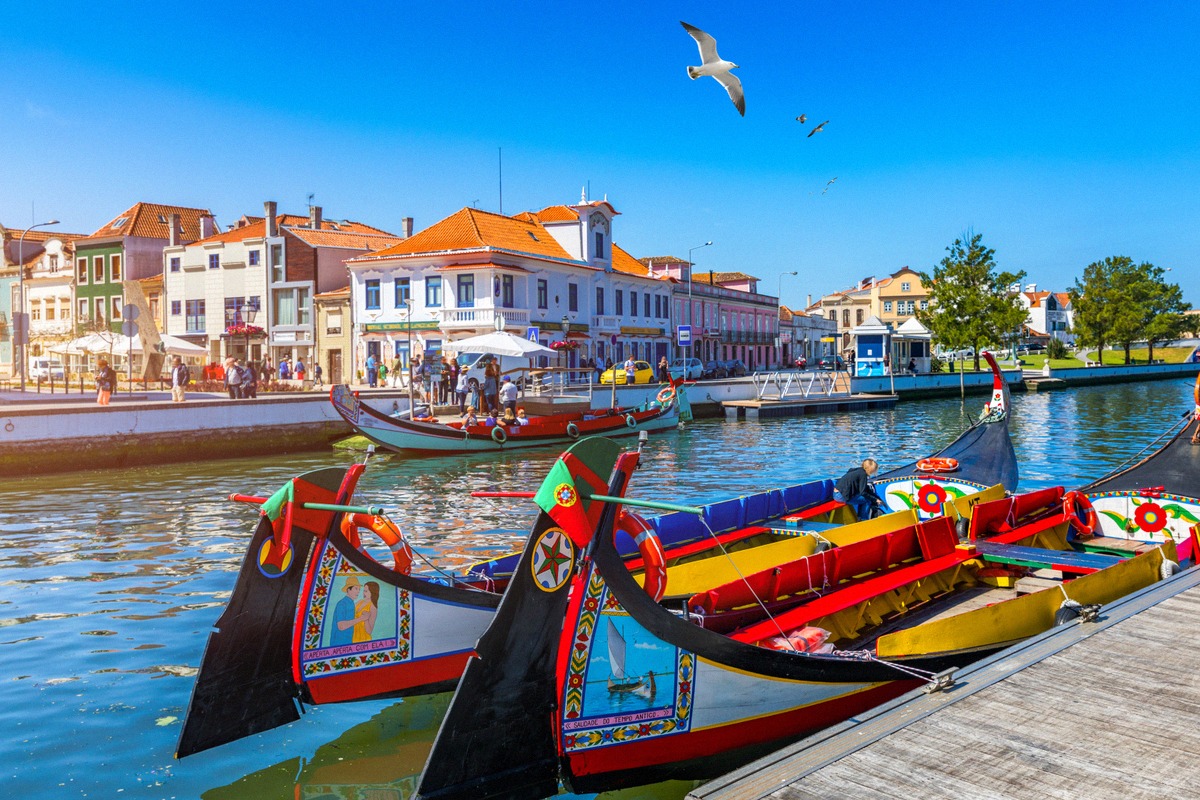
Aveiro lies on its lagoon south of Porto, Guimarães and Braga to the north. CP suburban trains serve all three, and the Douro Line (Linha do Douro) runs into the Douro Valley.
You can reach Porto by air, on the Alfa Pendular from Lisbon in just under three hours, or by car. In the city, the metro, trams and buses take you around the districts.

